Monday, August 4, 2025

Cartologica


Installation Title: Cartologica- (ongoing project)

Medium: Cardboards and Atlas

Size: Variable

Year 2025

Cartologica is a fusion of two core concepts—cartography and logic—that together explore how we map and make sense of the world, both geographically and intellectually. Cartography, the practice of mapping, serves as the foundation for this installation, where hundreds of thin, flat, round cardboard shapes, each hollowed and filled with pages from atlases. These delicate pieces represent not only the physical act of mapping but also the mental landscapes we navigate—our memories, perceptions, and the shifting topographies of identity and history.

The use of atlas pages is intentional—maps are tools that shape our understanding of geography, but they are also tied to the act of migration, displacement, and exploration. These pages symbolize the diverse geographies we inhabit and the complex histories of movement that define both individual and collective identities. These maps, with their fragmented and overlapping territories, reflect the fluid nature of experience and the ongoing process of navigating between places, cultures, and memories.

The second part of the title, logic, introduces the intellectual framework that governs the creation of these maps. It points to the process by which we impose order on the world—through systems of knowledge, reason, and understanding. As we chart the world around us, we use logic to organize our experiences into something coherent, creating personal maps that help us navigate both space and time. The hollow centers of the cardboard pieces symbolize the gaps within memory—spaces between moments and places that remain fluid and malleable, shaped by evolving perspectives.

The cardboard itself serves as a symbol of movement—its lightweight, flexible nature evoking the transient, ever-changing conditions of migration and displacement. The organic arrangement of the pieces reflects the fluidity of migration, the movement from one place to another, and the process of re-establishing oneself in a new space, much like the constant reshaping of personal and collective identities.

In Cartologica, these two elements—cartography and logic—are not fixed. The installation challenges the traditional notion of maps as immutable or static, suggesting instead that our understanding of geography, memory, and identity is constantly shifting. The arrangement of the pieces reflects the unpredictable nature of life, where personal maps are in constant flux, reshaped by new experiences, shifting perspectives, and evolving ways of thinking.

The installation invite us to reflect on our own process of mapping—our personal journeys through time, place, and memory. Cartologica encourages us to reconsider the boundaries we draw in our lives, examining how they are influenced by both the logic of understanding and the fluid, ever-changing landscapes of our experiences.


“Read more about my upcoming exhibition Rhythms of Identity →

Sunday, August 3, 2025

Exhibition Announcement: NGE-HENG! Refleksi Mental


Exhibition Announcement: NGE-HENG! Refleksi Mental

Out of Nowhere Vol. 2 at Semesta’s Gallery, Jakarta
9–31 August 2025

I'm excited to be participating in the group exhibition “NGE-HENG! Refleksi Mental,” curated by Irene Agrivina, held at Semesta’s Gallery in Jakarta this August. This show is part of the Out of Nowhere Vol. 2 series and brings together artists responding to themes of mental pause, absurdity, and emotional reflection—a timely exploration of disconnection and resilience.

My Work in the Exhibition

Title: Revolusi Lembut (Soft Revolution)

Artist: Amir Zainorin

Materials: Bamboo poles, rotating motors, fabric bandages, ink

Year: 2025

Dimensions: Variable (site-responsive)

Artwork Statement:
Three bamboo poles wrapped in hand-inked bandages slowly rotate from the ceiling. Phrases like “BBBBlack is ordinary” and “TRUE clr = INSIDE” emerge and disappear between folds. The motion blurs the text, turning language into texture. Soft Revolution reflects on identity, erasure, and healing—where only parts are visible, and softness holds a quiet strength.

Exhibition Theme: NGE-HENG! Refleksi Mental

“Nge-heng,” in Indonesian slang, refers to a frozen state—like a mental crash or system halt. This exhibition presents artistic reflections on psychological glitches, emotional stagnation, and poetic reboots. How do we confront stasis? What surfaces during breakdown?

Opening Ceremony

Saturday, 9 August 2025
3:00 PM (WIB)
Special Guest: Cosmas D. Gozali

Venue

Semesta’s Gallery
Jl. Taman Sari No. 77 Kav. 9, RT3/RW3, Lebak Bulus
Cilandak District, South Jakarta, Indonesia

Curator

Irene Agrivina

Selected Participating Artists Include:

  • Amir Zainorin (Copenhagen)
  • Alfiah Rahdini (Yogyakarta)
  • Bob Marijinal (Jakarta)
  • Dave Syauta (Bandung)
  • Erwin Erlangga x Paulina (Bandung)
  • Ismet ZE (Bandung)
  • Nayera Subaih (Egypt)
  • Secret of the Sun (Bekasi)
  • Patub Porx (Yogyakarta)
  • ...and many more (see full list in the flyer).

Contact: Gigz Chandra (+62 896 7660 2898)

Media Partners: TEMPO, Whiteboard Journal, Pop Hari Ini, and others

If you're in Jakarta this August, come by and experience this wide-ranging reflection on contemporary states of mind. I’ll also be sharing documentation after the opening.

Thanks for reading,
— Amir

Stateless Mind Pavilion: An Exploration of Belonging, Displacement, and Rebellion


The Stateless Mind Pavilion is more than just a space—it is a dynamic hub of interaction and dialogue. Designed to foster cross-cultural exchange and understanding, the Pavilion hosts an array of interactive events, including artist talks, workshops, performances, and panel discussions. Its mission is rooted in facilitating meaningful conversations about belonging, identity, and displacement, themes that resonate deeply through the "In Between Worlds" exhibition. Guided by the artist and curator’s narratives, visitors are invited to embark on a visual and emotional journey, discovering the complexities of existing between multiple worlds.


Origins of the Stateless Mind Pavilion

The Stateless Mind Pavilion finds its roots in the Stateless Mind Festivals, organized by Jambatan. Jambatan itself was founded in 2009 by Pia Poulsen and I, as a bridge between artistic communities in Malaysia and Denmark. This vision was brought to life when Nur Hanim Khairuddin—now the General Manager of PORT—and I co-organized the Malaysian Art Festival at the Museum of Contemporary Art Roskilde and Gallery Shambala in Copenhagen in 2010. These early efforts planted the seeds for what would later evolve into the Stateless Mind Pavilion.

After a brief hiatus, I reactivated Jambatan in 2019, organizing the Stateless Mind Festival for the first time. This resurgence brought a renewed focus on challenging conventional boundaries and celebrating the richness of cross-cultural narratives. However, the true genesis of the Stateless Mind Pavilion came during my collaboration with PORT for their participation in the 59th Venice Biennale as part of a collateral event. Interestingly, while planning this, we were informed that the term "pavilion" could not be used unless it represented a national entity. This restriction became the catalyst for the Stateless Mind Pavilion.

The Stateless Mind Pavilion was officially activated during my solo show at Kapallorek. The Pavilion also showcases an archive of activities from past Stateless Mind Festivals, providing visitors with a historical context and a deeper understanding of its evolution. This marked a pivotal moment, situating the Pavilion as an evolving platform for dialogue and exchange. It will be fascinating to see how it develops in the future, continuing to challenge norms and create spaces for meaningful interaction.


A Rebellion Against Conformity

The Stateless Mind Pavilion was born out of a spirit of rebellion. Its creation represents a refusal to adhere to institutional rules and a declaration of independence from imposed limitations.  

In essence, the Stateless Mind Pavilion challenges the notion of conformity. It embodies the idea of making one’s own rules, charting one’s own path, and dictating one’s own journey. It questions the validity of man-made restrictions imposed by institutions, governments, or even familial expectations. By doing so, the Pavilion becomes a symbol of empowerment, encouraging individuals to embrace their unique identities and stories.


A Platform for Dialogue and Exchange

The Stateless Mind Pavilion serves as a sanctuary for artists, thinkers, and audiences to engage in open dialogue and to offers participants a chance to share, learn, and connect in profound ways—to create a platform for artists who live between worlds, who don’t fit into neat categories, who are constantly negotiating their place in different systems where in-betweenness is not a limitation, but a creative force.


Link to previous Stateless Mind Festivals:

https://www.facebook.com/profile.php?id=100064468159134

https://portperakvenice.wordpress.com/amir-zainorin/


Saturday, August 2, 2025

Continuing the Journey Across Borders: A Collaboration with Ronnie Bahari

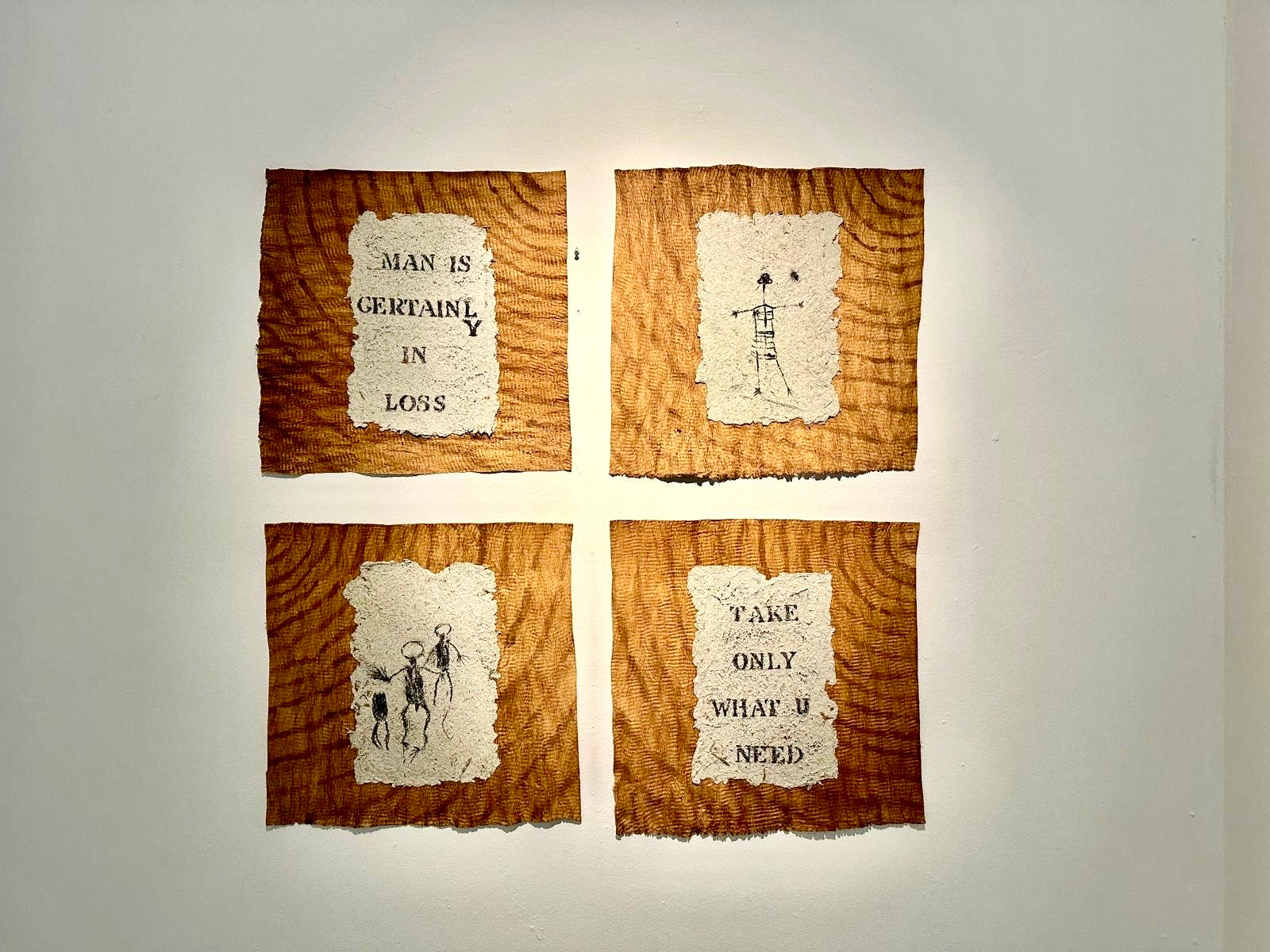
 In Across Borders, my artistic journey delves deeper into tradition and cultural storytelling through a meaningful collaboration with Ronnie Bahari, an Indigenous Semai photographer and cultural leader from Ipoh, Perak, Malaysia.

This is not the first time Ronnie and I have worked together. During my residency at PORT Ipoh in 2022, a time when the world was just beginning to recover from the COVID-19 pandemic, we embarked on a project exploring the natural and cultural landscapes of Lembah Kinta. Together, we ventured into its magnificent caves, where I filmed Ronnie for a video piece titled Cave Man. The video captured the essence of those excursions and marked the beginning of our creative partnership.

Link to the video 'Cave Man'- https://www.youtube.com/watch?v=7m75kP8NDDM&t=338s

Fast forward a couple of years, when Fadly Sabran of Kapallorek invited me to organize my solo exhibition at his space in Malaysia. While I live in Copenhagen, Denmark, and only visit Malaysia for specific projects, I saw this as an opportunity to reconnect creatively with Ronnie. I envisioned including a new work in the exhibition that would not only reignite our collaboration but also pay homage to our shared history. It felt fitting to bring Kapallorek into this collaboration, as Fadly and Ronnie had previously worked together for PORT’s Venice Biennale project.

When I shared the concept of this new collaboration with Ronnie, he enthusiastically agreed. While I remained in Copenhagen, Ronnie took the lead in creating the handmade paper from pandanus leaves and then produced a couple of images inspired by the ancient cave drawings we had encountered in Lembah Kinta. In response to his imagery, I crafted accompanying text that wove together personal reflections and cultural narratives, creating a dialogue between our individual contributions. The resulting work highlights the interplay of visual and textual storytelling, honoring both the tangible and intangible elements of Malaysian heritage.

This project is more than just a creative endeavor; it is a celebration of enduring connections and shared artistry that span time and distance. It underscores the importance of preserving and reimagining traditions while fostering dialogue between local communities and global audiences. By intertwining our creative practices, Across Borders offers a tactile, visual, and emotional connection to the stories of Malaysia’s land, people, and culture.

Ronnie at his studio at Polytechnic Ungku Omar, Ipoh and Anna.

Reduced to One: How 'no idea' Stole the Show

  No Idea has been on quite a journey. It all started back in 2012 with my photo performance, Sign of Times @ Copenhagen. Teaming up with photographer Maher Khatib, we roamed Copenhagen on Maher's car for a day, holding up signs and asking passersby, “What pops into your mind when I say the word ‘No?’”

The responses were as varied as the people themselves—some funny, some thought-provoking, and some downright puzzling. Somewhere in that mix, No Idea was born—a phrase so simple, yet so full of possibilities.

Fast forward to 2022, during my residency at Fyns Grafiske Værksted / Funen Printmaking Studio in Odense. No Idea resurfaced as part of a text-based series silkscreened onto pages of an old Danish atlas. The combination of familiar phrases and intricate maps created a playful tension, inviting viewers to find connections between language and geography.

When it came time to exhibit the works at Kapallorek Artspace for my solo show In Between Worlds, nine pieces from the series made the initial cut. They were arranged on the wall, and the process of figuring out their placement became a project in itself. Enter Akmal Sabran, the ever-patient technician, and Anna Cuomo, the curator, who suggested mounting the works on boards to give them a cleaner, more polished look.

And then came the magic moment. Akmal placed No Idea right in the center of the wall. Anna and I looked at each other—both amused and intrigued. It just worked. Suddenly, it felt like the rest of the series was unnecessary. No Idea stood there, holding its own, commanding attention. Less is more, they say—and in this case, it couldn’t have been truer.

What started as nine works became one. Reduced to a single piece, the series transformed into a statement about simplicity, focus, and perhaps the power of a well-placed idea. It was as if No Idea was winking at us, saying, “I’ve got this.”

This unexpected twist got me thinking about how I might approach exhibiting the full series in the future. For now, though, I’m enjoying how No Idea managed to steal the show—proving that sometimes, the best ideas come from no idea at all.


Art as a Stubborn Journey to Empathy


Artworks from 'Atlas of Being ' series


Art as a Stubborn Journey to Empathy

Art is about being stubborn. It begins with the refusal to give in—to the pressures of conformity, the weight of doubt, or the noise of distractions. This stubbornness isn’t about arrogance; it’s about conviction. It’s about standing firm in the face of uncertainty, choosing to believe that something within you is worth exploring, worth bringing into existence, even if the world doesn’t immediately understand or value it.

But stubbornness isn’t without consequence. It thickens your skin. Rejections, misunderstandings, and failures become familiar companions, teaching you resilience. Over time, this "thickness" shields you from external judgment and self-doubt, allowing you to remain on the path, even when it feels like no one else sees what you see.

And yet, it’s in this space of stubborn persistence and thickened defenses that reflection begins. The solitude of creating—the repetition, the experimentation, the endless wrestling with ideas—forces you to look inward. You start to see yourself not just as the creator but as a human being in all your complexity: flawed, searching, vulnerable.

This self-reflection opens the door to empathy. As you navigate your own struggles, you recognize them in others. The stories you tell through your art become not just about you but about the shared experiences of humanity. Stubbornness, thick skin, and introspection evolve into compassion. You realize that art is not merely an act of self-expression; it’s a bridge to connect with others, to feel their joys, sorrows, and aspirations as if they were your own.

In the end, art is the process of being stubborn enough to create, thick enough to endure, and open enough to reflect. And in doing so, it transforms both the artist and the audience, fostering empathy in a world that so desperately needs it.


Friday, August 1, 2025

Echoes of History: A Glimpse into Malaysia’s Past


Echoes of History

Intro

Echoes of History, a deeply personal series by Malaysian–Danish artist Amir Zainorin, explores Malaysia’s turbulent years between 1941 and 1968 through meticulous ink-on-paper works. Drawing from archival articles in Berita Harian and New Straits Times, sourced via Singapore’s National Library Board, Amir reinterprets history by hand—not digitally—infusing large-scale reproductions with the intimate texture of handwriting. Accompanied by the video installation Navigating History, located in his Kapallorek Artspace studio, the work merges archival narrative with lived memory. Through this layered installation, he invites viewers into a reflective dialogue on national identity, historical transformation, and the interplay between memory and self-understanding.


Main text

Echoes of History is a deeply personal series where I explore Malaysia’s complex history between 1941 and 1968. Using meticulous ink-on-paper works, I bring to life significant moments of the country’s past, drawing from archival news clippings and historical publications. My research primarily focuses on two newspapers—Berita Harian and New Straits Times—with all articles sourced from the National Library Board of Singapore.

At first glance, the works appear as if they were digitally printed, but a closer look reveals the intricate details of my handwriting. This intentional technique blurs the line between machine and manual, evoking a sense of nostalgia and intimacy. All the pieces have been enlarged far beyond their original size, emphasizing the weight and significance of the historical narratives they depict.

This project is not about challenging viewers but rather a journey of self-exploration, driven by my curiosity about the past. Having often been asked about my background, I was inspired to delve into the history of Malaysia and the region around it. Through this process, I uncovered layers of narratives from an era marked by war, independence, and transformation.

As a child in Kelantan, our next-door neighbor was a Japanese man. I never really knew what he did — perhaps he worked with the government, perhaps something else — but he was the first foreigner I ever met. I remember thinking his language was beautiful. He spoke English, but with a Japanese accent, gentle and flowing. I didn’t understand much, but I loved the rhythm of it, like music. This was striking to me, because by then I already knew the stories of the Japanese occupation — the fear, the cruelty, the ruthless image carried in history books. Yet here, right next door, was a man whose presence was the opposite: soft, kind, ordinary. That contradiction stayed with me. It showed me that history is never one voice. Sometimes it is what you read in archives, and sometimes it is simply the sound of a neighbor’s accent that feels like music. Perhaps this is where my curiosity began — not the urge to understand everything, but the openness to listen, to let other voices exist without explanation.

Near Kelantan’s Sabak Beach, where the Japanese first landed when the war began, the remnants of bunkers still stood. When my family went there for picnics, we children played around these abandoned structures, never fully grasping their historical weight. They were playgrounds for us, not monuments of conquest. Looking back, this innocent play against the backdrop of war ruins shaped my understanding of how history slips between fact and memory, terror and tenderness.

The installation extends into video with Navigating History, filmed in my studio at Kapallorek Artspace. It provides an intimate glimpse into the process, showing how archival fragments, personal memory, and repetition slowly build into layered works. The act of rewriting becomes both meditation and confrontation: a way to stitch myself into the narratives that once seemed distant.

With Echoes of History, I am not only preserving fragments of Malaysia’s past but also engaging in a personal dialogue with history. This work represents my effort to connect with the stories that define the region and its people, while also acknowledging that history is never whole — it is fragmented, contradictory, and always shifting. The official accounts tell one story, memory tells another, and somewhere in between, identity takes shape.

In a way, this essay itself participates in that same process. It was first written only months ago, and now it has been rewritten, expanded, and republished. Each version is slightly different, shaped by time, by memory, by what I choose to include or leave out. Just as handwriting resists the permanence of print, rewriting resists the idea of a single, fixed narrative. Both the work and the text remind me that history — whether personal or national — is always provisional, always open to being told again.

Thursday, July 31, 2025

X-Raying to the Inside with Kompang


https://www.instagram.com/reel/DE-HRJ6yVYr/?utm_source=ig_web_copy_link&igsh=MzRlODBiNWFlZA==

I am not entirely sure when or where I got the idea to make the kompang. Perhaps it came from a desire to create an artwork that connects with my childhood. Growing up, music played a significant role in my life, and my father, a ghazal singer, surely influenced this love from an early age. Music has always been a companion, moving with me through the eras of transistor radios, Walkmans, cassette players, record albums, CDs, and now Spotify.

In my artwork X-ray Kompang, I merge this personal connection to music with a fascination for X-ray films. X-rays have always captivated me—their ability to reveal the unseen within us is both scientific and poetic. By replacing the traditional skin of the kompang, a Malaysian drum, with X-ray films, I transform the instrument into a bridge between sound and introspection. The X-ray, a tool that reveals what lies beneath the surface, becomes a powerful metaphor for identity—what exists beyond nationality, beyond external appearances, beyond the visible.

This project has also encouraged me to reconnect with family and old friends. As I’ve grown older, I’ve realised how precious it is to nurture these relationships. The X-rays used in this work come exclusively from my close circle, making the piece deeply personal. Each X-ray carries a unique story, evoking memories of shared experiences and ties to my roots.

Through X-ray Kompang, I invite viewers to reflect—not just on the visible and invisible within themselves, but also on the relationships and memories that shape who we are. 

This work explores the ways in which movement—of people, of sound —shapes our understanding of who we are. The process is one of adaptation and dialogue, where materials carry histories, and objects are repurposed to tell new stories. I do not impose conclusions but rather invites engagement, reflection, and participation. In Rhythm of Identity, identity is neither fixed nor singular; it is a rhythm, an echo, an evolving composition.


Wednesday, July 30, 2025

Layering Gang kelinci, Gudskul, Jakarta Indonesia


Title: Layering Gang Kelinci @Gudskul, Jakarta, Indonesia.
Medium: silk screen and heat press
Material: found plastic Year: 2023


Layering Gang Kelinci: Symbiosis of Culture and Plastic Consciousness

"Layering Gang Kelinci: Symbiosis of Culture and Plastic Consciousness" transcends typical artistic boundaries, offering an immersive and transformative experience at Gudskul. This exhibition intricately merges environmental consciousness with cultural exploration, enriching the ongoing discourse on the interplay between art, culture, and environmental responsibility. It targets art enthusiasts, environmental activists, the local community, and cultural scholars.

During a memorable motorcycle excursion with Adi, a Gudskul guard, I was invited into his village residence near Gudskul. As we journeyed through the village, we embarked on a collection of discarded plastics. These plastics, once considered waste, became the foundation of my art. Through innovative techniques like silk screening mixed with heat pressing, these salvaged plastics metamorphosed into captivating artworks showcased at the Gudskul exhibition space.

The exhibition features interactive installations and sensory experiences, engaging the audience in a dialogue about environmental sustainability and cultural narratives. Visitors can touch and feel the textures of the transformed plastics, participate in interactive displays, and immerse themselves in the sensory elements of the exhibition.

"Layering Gang Kelinci" aligns harmoniously with Gudskul's ethos—a collaborative learning hub and contemporary art ecosystem spearheaded by Jakarta's art collectives: ruangrupa, Serrum, and Grafis Huru Hara (GHH). Since the early 2000s, these collectives have championed collective and collaborative practices in contemporary art. United by values like equity, sharing, solidarity, friendship, and unity, these collectives established a shared space in 2015 to advance the vibrancy of art and culture, igniting creative initiatives within the wider community.

In tandem with this cooperative outlook, an inventive platform emerged through festival organization and seminar curations, notably showcased in the immersive event series dubbed Stateless Mind by Jambatan collective, which I co-founded in Copenhagen. This initiative resonates with my personal artistic practice while mirroring Gudskul’s collaborative ethos. Tailored for diaspora artists in the Nordic regions, this thoughtful initiative underscores a commitment to nurturing artistic interaction, cultural dialogues, and creative empowerment across diverse artistic spheres.

By intertwining environmental advocacy, cultural exploration, and community engagement, "Layering Gang Kelinci" bridges with Gudskul to shape a cultural environment steeped in inclusivity, collaboration, and artistic resonance.

https://youtu.be/Hy8ww9tIJZ0


Installation view of the exhibition


close up of the artwork


Adi on his motorbike


Interview session at Ruru Radio, Gudskul


Gudskul-a place surrounded by cafes, studios, concert hall and artist residency.

Tuesday, July 29, 2025

Tong Tana @National art Gallery. Malaysia


Tong Tana is derived from the Penan language, meaning "in the forest." The Penan, a nomadic group from Sarawak, Borneo, are among the last remaining hunter-gatherer communities. Known for their practice of molong, they take only what is necessary from nature, embodying a sustainable relationship with their environment.

The pieces for the KL Biennale reflect a deep sense of longing for my homeland, where I was born and raised. This installation captures memories tied to history, disappearing cultures, and the evolution of new lifestyles. Tong Tana examines themes of conflict, displacement, marginalization, and urban progress through the lens of Malaysia’s indigenous peoples, informed by site visits and mass media narratives.

Video Documentaries – Voice of the Jungle
As a migrant living far from home, I often face questions about my identity and heritage. This curiosity inspired me to research my roots, the history of Malaysia, and the stories of its indigenous peoples. These explorations culminated in two video documentaries:

Ulu Baram, Sarawak (September 2019)
Photographer Fadza Ishak and I traveled to Miri, Sarawak, to meet Arthur Jojo of the Kenyah tribe, who runs Segah Selaan One Stop Homestay in Ulu Baram. Arthur served as our guide during our journey.
Sarawak, home to over 26 ethnic groups, is rich in diversity. The Orang Ulu (Upriver People) include the Penan, Kayan, Kenyah, Saban, Punan, and Kelabit. These groups traditionally live in longhouses and practice shifting cultivation and fishing. However, economic exploitation, including logging, plantations, dams, and oil and gas extraction since the 1970s, has eroded their land rights and displaced thousands. Despite legal protections, many indigenous communities now face debt and environmental devastation, threatening their way of life.

Pos Piah, Perak (January 2019)
With the help of my friend Shazni Bhai, an artist and activist, I visited the Temiar community in Pos Piah, deep in the rainforest of Sg. Siput, Perak.
The Temiar have lived in this area for approximately 8,000 years, practicing farming, hunting, and gathering. Although some access modern medicine, they largely rely on traditional practices. The rainforest, estimated to be 130 million years old, is threatened by palm oil production and logging, displacing indigenous communities. The Orang Asli, who constitute less than 1% of Malaysia’s population, continue to struggle for land rights as forests are cleared for economic gain.

Installation Elements

  • Stamp Series: Inspired by colonial-era stamps featuring rainforest animals and indigenous peoples, these works reinterpret and manipulate the imagery to critique modern realities.
  • Papercuttings and Lightboxes: Images of indigenous communities are transformed into papercuttings displayed in illuminated frames, symbolizing loss and the impact of modernization.
  • Media Analysis: The installation critiques how mass media shapes public perception of indigenous issues, influencing thoughts, attitudes, and behaviors.

This body of work reflects on the erasure of indigenous histories, the destruction of natural environments, and the resilience of these communities in the face of modernization and marginalization.

Contemporary Ode to the Daily Mundane

Title: Contemporary Ode to the Daily Mundane @Edinburg Print, Scotland in 2023 
Medium:  Silk Screen on atlas

In the Margin: Navigating Displacement as a Diaspora Artist

It's simply by accident that I stumbled into being part of the group exhibition called "In the Margin", which took place at Edinburgh Print in Scotland. As COVID restrictions eased after two years, I was eager to unleash the creative energy that had been building up. The theme of displacement resonated deeply with me, a diaspora artist constantly navigating the complexities of identity and belonging.

Journey to the Exhibition

In my quest for artistic residencies, I discovered Fyns Grafiske Værksted in Odense, Denmark. This city holds a special place in my heart, as I had previously worked on a school project there. Odense, with its rich history and connection to HC Andersen, felt like a familiar yet new adventure. Despite my hesitations about speaking Danish, I decided to call the residency program, leading to a fruitful conversation with Lene, who runs the place.

Challenges and Memorable Moments

During my residency, I faced the challenge of working with new techniques and materials. However, the experience was enriched by collaborating with Birgitte Lyng Andersen. Her openness to experimentation allowed me to explore new artistic avenues and push the boundaries of my work.

Artistic Techniques and Processes

The "Contemporary Ode to the Daily Mundane" series emerged from this residency. I employed silk screen techniques, integrating photo-performance elements with maps and text. The use of old atlas pages as backgrounds symbolized the ever-changing boundaries and spaces we navigate. The prints featured images of me holding or wearing objects that shape my identity, such as a mortar, globe, luggage bag, and rice cooker.

Thematic Exploration

Displacement, both voluntary and forced, has been a recurring theme in my work. While I moved to Denmark out of love, the feeling of being 'displaced' still lingers. This series explores the idea of home, identity, and belonging in times of uncertainty. It seeks to understand what it means to be human and an artist amidst constant change.

Conclusion

My residency at Fyns Grafiske Værksted and participation in the "In the Margin" exhibition have profoundly impacted my artistic journey. It provided a platform to delve deeper into the theme of displacement and express my experiences as a diaspora artist. I invite you to explore this journey with me and reflect on the intricate layers of identity and belonging.

https://edinburghprintmakers.co.uk/in-from-the-margins/
https://fynsgv.dk/nyheder/
https://www.thestar.com.my/lifestyle/culture/2020/06/05/denmark-based-amir-zainorin-takes-multiplicity-to-surreal-heights-in-lockdown-photo-series


Monday, July 28, 2025

Rewriting Indigenous Narratives: 'Pera + Flora + Fauna' at Venice Biennale


Rewriting Indigenous Narratives: 'Pera + Flora + Fauna' at Venice Biennale

On a transformative day in April 2022, the Archivi della Misericordia in Cannaregio, Venice, Italy, hosted a profound performative event titled 'Pera + Flora + Fauna.' This event, part of the Port exhibition series under the biennale theme 'Pera Flora Fauna,' was a collective endeavor to address the dehumanization and re-humanization of indigenous communities worldwide.

Main Message

The event underscored the importance of collective unity, the need to preserve indigenous cultures, and the profound impact of industrialized nations on these communities. It emphasized the interconnectedness of humanity and nature, urging a shift from the individualistic 'me' to the communal 'we.'

Event Highlights

The highlight of the event was a series of performances that brought to life the themes of indigenous identity and environmental conservation. Drawing inspiration from Muhammad Ali’s evocative poem 'me/we,' the performances celebrated communal spirit, sharing, and the prioritization of community over individuality.

Curatorial Insight

Commissioned by Nur Hanim Mohamed Khairuddin, the General Manager of PORT, and curated by a team including myself, 'Pera + Flora + Fauna' delved deeply into the discourse on the impact of mainstream cultural attitudes from industrialized nations on indigenous communities and the environment. Central to our exploration was the question: Could aesthetic contemplation foster the preservation of nature and uphold the rights and traditions of indigenous peoples? Additionally, we pondered whether indigenous populations had the agency to challenge and redefine the history predominantly documented by non-indigenous perspectives.

Impact and Reflection

This initiative provided a vital platform for indigenous voices to reclaim their narratives and histories, disrupting the dominant discourse and advocating for a nuanced understanding of indigenous cultures and their relationship with nature. By examining various viewpoints on humanity, nature, and their interconnectedness, 'Pera + Flora + Fauna' stimulated dialogue, fostered critical reflection, and illuminated the complexities surrounding indigenous rights, environmental conservation, and cultural autonomy.


Dear Helle...


Title: Dear Helle
Medium: Installation @Immigrant Museum Farum, Denmark
Materials: Postcards and pins
Year: 2014

Dear Helle: An Interactive Installation at the Immigrant Museum, Farum, Denmark

In 2014, the Immigrant Museum in Farum, Denmark, hosted a compelling installation titled Dear Helle. This unique artwork featured two images of the former Danish Prime Minister, Helle Thorning Schmidt, adorned with hundreds of postcards meticulously pinned to the museum's wall. These postcards were a collection amassed over the years from cultural hubs and restaurants in Copenhagen, creating a rich tapestry of public sentiment and cultural dialogue.

Visitor Engagement

The installation was designed to be interactive, encouraging museum visitors to engage actively by writing postcards to the Prime Minister throughout the exhibition's duration. This engagement fostered a sense of participation and personal connection, allowing visitors to voice their thoughts and feelings directly to a political figure.

Collaboration with Trampoline House

In collaboration with Trampoline House, an independent community center offering support to refugees and asylum seekers in Copenhagen, workshops were organized where participants could share their experiences and challenges. These workshops were a platform for refugees to articulate the unbearable challenges of living in refugee camps, creating heartfelt messages that were later compiled and sent to the Prime Minister. This collaboration highlighted the voices of those often marginalized, bringing their stories to the forefront of public consciousness.

Messages to the Prime Minister

The postcards collected during the exhibition were not just symbolic; they were a direct line of communication to the Prime Minister. After the exhibition concluded, these messages were dispatched to Helle Thorning Schmidt's office, ensuring that the voices of the participants and visitors were heard at the highest levels of government.

Migrant Interviews

Adding another layer to the installation, videos showcasing interviews with migrants detailed their experiences living in Denmark. These personal narratives provided a poignant backdrop to the postcards, offering deeper insight into the lives and struggles of migrants. The interviews were a powerful testament to the resilience and courage of those who have sought refuge in Denmark.

Thematic Essence

The essence of Dear Helle revolves around the fleeting nature of existence, as its original form could only be observed and experienced within the exhibition's temporal confines. The utilization of postcards symbolizes transparency and signifies a period of transition—a tangible marker of change amidst the rapid evolution towards a digitized era characterized by swift technological advancements.

Impact and Response

The installation elicited emotional responses from museum visitors and the general public. Many were moved by the personal stories and the opportunity to engage directly with a political figure. The emotional impact of the artwork was profound, resonating deeply with those who experienced it.

Conclusion

Dear Helle stands as a significant contribution to the discourse on migration and political engagement. By combining visual art, personal narratives, and direct political communication, the installation created a powerful platform for dialogue and reflection. It underscored the importance of giving a voice to the marginalized and highlighted the potential of art to influence and inspire societal change.